
WELCOME BONUS 300%
UP TO €2000 + 100
FREE SPINS
UP TO €2000 + 100
FREE SPINS
Home → Blackjack
Blackjack at 1Go Casino: Variants, Rules and Payouts
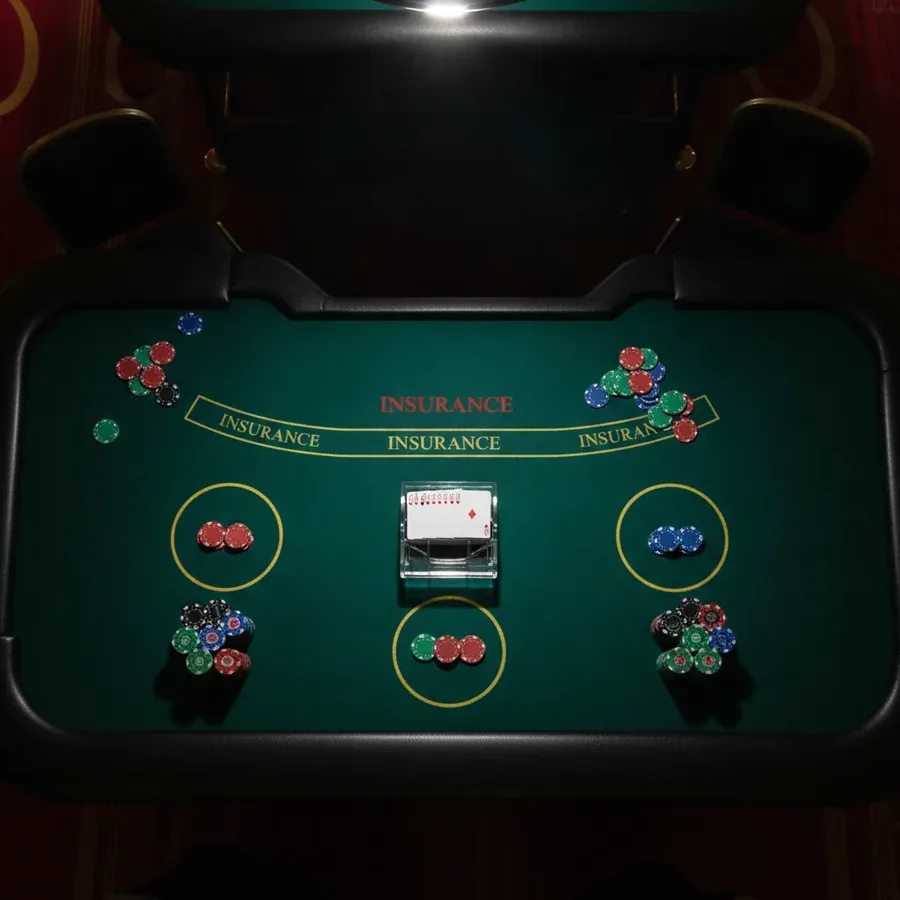
Insurance Pays 2:1 Yet Still Costs Money
The side bet Insurance pays 2:1 when the dealer holds an Ace, but it carries a house edge of 7.47% on six to eight decks. This negative expectation persists even though the payout appears generous compared to standard losses. Players lose money over time by accepting this wager without card counting skills.
A single-deck variant lowers the house edge to approximately 5.88%, yet remains unfavorable for basic strategy players. The base game RTP sits at 92.53% when including this costly option, significantly dragging down overall returns. Declining insurance preserves the main game's theoretical return rate.
Basic strategy dictates always rejecting insurance unless the true count reaches +3 or higher through precise card counting. Deviating from this rule increases the casino's average hold on every betting unit placed. The separate nature of this wager isolates its poor mathematical performance from the primary hand.
Six Decks to Eight Decks in the Shoe
Switching from one deck to eight decks increases the house advantage by approximately 0.48 percentage points in standard play. A single-deck game offers a 0.15% edge, whereas multi-deck shoes shift the balance toward the operator. Fewer cards remaining in the shoe alter probability distributions for subsequent hands.
Specific rule modifiers interact with deck counts to adjust the final house edge by small margins. Resplitting Aces improves the RTP by 0.08%, while doubling after split adds another 0.14% benefit. These adjustments partially offset the increased difficulty posed by larger shoe sizes.
A liberal Vegas Strip configuration using multiple decks maintains a 0.28% house edge with soft 17 standing rules. Standard deviation measures 1.15 for these favorable combinations, indicating moderate volatility during sessions. Players seeking lower variance should prioritize games with surrender options and resplit allowances.
Infinite Blackjack vs Classic Seven-Seat Table
Infinite Blackjack hosted by Evolution allows unlimited seats at a table with bets ranging from 1 to 5,000 EUR. This format removes seating constraints found in traditional seven-seat layouts, accommodating high-volume players efficiently. The RTP for this specific infinite variant stands at 99.47%.
Classic tables like Lightning Blackjack cap participation at limited spots while offering multipliers up to 25x on winning hands. Betting limits for lightning variants range between 1 and 2,500 EUR, creating a different risk profile for participants. The RTP for lightning blackjack reaches 99.56%, slightly higher than the infinite version.
Party-themed tables such as Blackjack Party feature two moderators to create a social atmosphere within restricted capacity. Wagers here span from 1.00 to 1,000 EUR, catering to casual players rather than high rollers. Each format delivers distinct pacing and interaction levels despite sharing core blackjack mechanics.
How long does a Live Blackjack round take?
Live blackjack rounds typically conclude within two to three minutes depending on player decisions and table speed. Infinite tables often operate faster due to fewer manual interventions by dealers compared to classic setups. Rapid gameplay accelerates turnover rates for active participants at the virtual felt.
Side bets like Any Pair or Hot 3 add extra decision time as players evaluate additional outcomes before the deal. These optional wagers increase complexity but do not significantly extend the total duration of each hand cycle. Dealers manage multiple inputs simultaneously without causing noticeable delays for other participants.
Lightning multipliers introduce brief pauses for result verification before payouts are distributed across winning accounts. This verification step ensures accuracy for random number generator outputs applied to selected hands. Total session length expands proportionally with the frequency of triggered multiplier events.
Side Bets Increase House Edge to 5 Percent
Side bets such as 21+3 or Bust It carry house edges exceeding five percent, drastically reducing overall player returns. While main game RTPs hover near 99%, these auxiliary wagers drag the combined expected value downward significantly. Players chasing large payouts sacrifice mathematical consistency for occasional high-variance opportunities.
The Infinite Blackjack table offers four distinct side bets alongside the primary game, each with unique payout structures. These options attract attention due to their flashy graphics but lack the favorable odds of the main blackjack hand. Statistical analysis confirms that consistent side bet usage erodes bankrolls faster than conservative play.
Accepting any pair or hot 3 bets transforms a low-edge game into a high-volatility experience with steep costs. The difference between main game profitability and side bet loss rates highlights the importance of selective wagering. Maintaining focus on base strategy minimizes exposure to these expensive auxiliary markets.
Blackjack variants at a glance
| Variant | Payout | House edge | Rule | Bet range |
|---|---|---|---|---|
| Blackjack 6 Decks, S17, DAS, DOA, Auszahlung 3:2, Basisstrategie | 99.54% | 0.46% | Dealer steht auf Soft 17; Verdopplung auf jeder Zweierkarte; Verdopplung nach Split erlaubt; keine Aufgabe. Basisstrategie ist für diesen Wert zwingend | Blackjack 3:2, normaler Gewinn 1:1, Insurance 2:1 |
| Blackjack Surrender (Late Surrender) – Regel-Effekt | n.a. (Regel-Modifikator) | −0.08 Prozentpunkte | Spieler gibt Hand nach Dealer-Blackjack-Prüfung auf, verliert die Hälfte des Einsatzes. Verbessert RTP um ca. 0.08 Prozentpunkte. Early Surrender ist wesentlich wertvoller (bis −0.6 Prozentpunkte), aber extrem selten. | Rückzahlung 50% des Einsatzes |
| Blackjack Ein Deck, klassische Regeln, 3:2 | 99.85% | 0.15% | Weniger Decks = niedrigerer Vorteil; ein Deck gibt ca. −0.48 Prozentpunkte gegenüber 8 Decks. Oft durch 6:5 Auszahlung kompensiert. | Blackjack 3:2, Gewinn 1:1 |
| Blackjack Split / Double / H17 – Regel-Effekte | n.a. (Regel-Modifikatoren) | H17 +0.22 Prozentpunkte; RSA −0.08 Prozentpunkte; DAS −0.14 Prozentpunkte | Dealer Hits Soft 17 verschlechtert RTP um 0.22 Prozentpunkte; Resplit Aces verbessert um 0.08 Prozentpunkte; Double After Split verbessert um ca. 0.14 Prozentpunkte; 6 Decks statt 8 – ca. 0.02 Prozentpunkte. | Double – Einsatz ×2 mit einer Karte; Split – bis 4 Hände; Ass-Split meist mit einer Karte. |
| Blackjack Liberal Vegas Strip (liberale Regeln, 3:2) | 99.72% | 0.28% | Günstigste Regelkombination: S17 + DAS + Resplit + Late Surrender. Standardabweichung 1,15 | Blackjack 3:2, Gewinn 1:1 |
| Blackjack Auszahlung 6:5 statt 3:2 (6 Decks) | 98.15% | 1.85% | Ersatz von 3:2 durch 6:5 fügt exakt +1.39 Prozentpunkte zum Vorteil des Casinos hinzu – stärker als jede andere Regeländerung. Bei $10 Einsatz zahlt Blackjack $12 statt $15. | Blackjack 6:5, Gewinn 1:1 |
Split, Double Down, and Surrender in Numbers
Blackjack Liberal Vegas Strip delivers a house edge of 0.28% through liberal rule combinations including S17, DAS, Resplit, and Late Surrender. This configuration improves the Return to Player (RTP) to 99.72%, which is significantly higher than the standard 6-deck game with 6:5 payouts that holds a 1.85% advantage. Players utilizing this specific table structure retain more capital over extended sessions compared to restrictive variants.
The option for Late Surrender allows players to forfeit half their stake after the dealer checks for blackjack, reducing the house edge by approximately 0.08 percentage points. This mechanic offers a strategic exit route unavailable in Early Surrender versions, which are rare but provide up to a -0.6% advantage if accessible. Using this feature correctly can mitigate losses during unfavorable initial hands against strong dealer upcards.
Double After Split (DAS) permits players to double their bet on any hand resulting from a split, improving the RTP by roughly 0.14 percentage points. This rule contrasts sharply with restrictions limiting doubling only to the first two cards or prohibiting it entirely after a split. The ability to capitalize on favorable split outcomes like soft hands increases the potential yield per wagering cycle.
Chose Wrong Table for 5 EUR Bankroll
Lightning Blackjack at Evolution imposes minimum bets starting at 1 EUR, which immediately consumes 20% of a strict 5 EUR bankroll in a single round. This high entry threshold leaves insufficient funds to absorb variance, especially when Lightning Multipliers up to 25x introduce extreme volatility to the session balance. A player risking such a small total stake faces rapid depletion without the buffer needed for recovery.
Infinite Blackjack also starts at 1 EUR minimum stakes, meaning a single loss wipes out one-fifth of the total available funds before any strategic decisions occur. The presence of four side bets further distracts from base strategy, as these wagers carry distinct RTPs that do not benefit the main game outcome. Maintaining a 5 EUR limit here requires ignoring all side opportunities to preserve core capital.
Table games contribute only 10% toward the bonus turnover requirement, making low-bankroll play inefficient for clearing the 300% welcome bonus up to €2,000. In contrast, slots contribute 100%, allowing faster progression through wagering requirements despite higher house edges. Allocating a tiny bankroll to blackjack delays bonus release while increasing the risk of busting before meeting the turnover target.
Bust at 22: Stake Lost Immediately
Standard blackjack rules dictate that any hand exceeding 21 results in an immediate loss of the entire stake, regardless of subsequent dealer outcomes. This fundamental mechanic applies uniformly across all variants, including the 6-deck version where the dealer stands on Soft 17 (S17). Players must calculate probabilities carefully to avoid hitting when their total approaches 21, as any card value of 10 or higher triggers a bust.
Insurance bets pay 2:1 if the dealer has blackjack, but this side wager carries a house edge of 7.47% due to its low RTP of 92.53%. Accepting insurance when holding a non-blackjack hand often leads to compounded losses, as the cost of the side bet exceeds the statistical benefit unless card counting indicates a True Count of +3 or higher. This rule penalizes impulsive betting during dealer ace-up scenarios.
The distinction between Soft 17 and Hard 17 influences dealer behavior, with some tables requiring the dealer to hit on Soft 17, adding 0.22 percentage points to the house edge. When the dealer hits, the probability of busting increases slightly, offering marginal hope for players standing on 12-16. However, a player busting at 22 loses instantly, emphasizing the critical nature of hitting vs. standing decisions near the threshold.
How much time is left for the decision?
Online blackjack interfaces typically impose strict time limits for player actions, often ranging from 10 to 30 seconds per turn depending on the provider's settings. Infinite Blackjack from Evolution accommodates unlimited players at the table, requiring synchronized timing that may reduce individual decision windows compared to private tables. Missing the deadline usually results in an automatic 'stand' or 'bust' action, forcing reliance on basic strategy defaults.
Live dealer games like Blackjack Party involve human moderators who manage the pace, potentially introducing slight delays between rounds but maintaining consistent decision intervals per hand. The party atmosphere with two hosts does not alter the underlying software timer governing bet placement and card requests. Players must monitor the screen closely to ensure they submit hits, splits, or doubles before the system auto-resolves the hand.
Software-based RNG blackjack games offer instant resolution, allowing players to make decisions without external time pressure beyond the initial bet confirmation phase. This speed contrasts with live streams where network latency or dealer processing times extend the overall session duration. Fast-paced play accelerates bankroll erosion, so managing decision speed helps maintain control over the number of hands played per hour.
How long do 100 EUR last at a 1 EUR table?
Playing at a 1 EUR minimum table with a 100 EUR bankroll allows for 100 initial hands if every round results in a push or even money win. However, with a house edge of 0.46% on optimal Liberal Vegas Strip rules, the expected loss per 100 EUR wagered is approximately 0.46 EUR. This theoretical decline suggests the bankroll will persist longer than on high-edge tables, provided optimal strategy is maintained throughout.
Switching to a 6-deck game with 6:5 payouts increases the house edge to 1.85%, raising the expected loss per 100 EUR wagered to 1.85 EUR. This nearly fourfold increase in disadvantage accelerates bankroll depletion, reducing the longevity of the same 100 EUR stake significantly. Players choosing this variant must accept a faster rate of capital reduction compared to standard 3:2 payout tables.
Including side bets like Any Pair or 21+3 introduces higher volatility and lower RTPs, which can drain the 100 EUR fund rapidly despite occasional large wins. These wagers do not count toward the main game's strategic optimization and often operate independently of the dealer's final hand. Limiting side bets preserves the bankroll's endurance, allowing more time to meet the 10% contribution requirement for the casino bonus turnover.
16 vs 10 played incorrectly: most common error
The fundamental error involves hitting a hard sixteen against a dealer ten, which drastically increases the house edge beyond the standard 0.46 percent baseline established by optimal basic strategy in multi-deck games. This specific misplay transforms a statistically manageable loss into a significantly higher expected value drain for the player over thousands of hands compared to standing or surrendering.
Infinite Blackjack from Evolution offers unlimited seats and side bets like Any Pair with an RTP of 99.47 percent, where adhering to strict basic strategy is essential to maintain this high theoretical return rate. Deviating from the correct play on a sixteen versus ten negates the mathematical advantage provided by the liberal ruleset available at this specific live table interface.
This mistake directly impacts the bonus turnover requirement because table games contribute only 10 percent toward the 300 percent welcome bonus up to 2,000 EUR plus 100 free spins condition. Consequently, players making this error must wager substantially more real money to clear the bonus terms compared to those playing correctly, extending the duration of their gameplay.
Double Down after Split: which tables allow it
Liberal Vegas Strip blackjack allows doubling after split (DAS), a rule that improves the player's RTP by approximately 0.14 percentage points compared to tables prohibiting this action entirely. This flexibility enables players to capitalize on strong two-card hands formed after splitting pairs, effectively reducing the overall house edge to 0.28 percent when combined with other favorable conditions.
Standard six-deck games often restrict doubling to the initial two cards only, whereas Infinite Blackjack permits DAS, enhancing strategic depth for users betting between one and five thousand euros per hand. The ability to double down on split hands significantly alters the variance and expected value calculations for every session played on these specific live dealer platforms offered by Evolution.
This rule variation matters greatly for bonus conversion since table games contribute just 10 percent to the wagering requirements of the 300 percent match bonus up to two thousand euros. Players utilizing DAS can theoretically reduce their total required turnover by improving win rates, although the low contribution percentage means they still face higher barriers than slot players.
Soft 17: Dealer Hits or Stands
When the dealer hits soft seventeen, the house edge increases by 0.22 percentage points compared to games where the dealer stands on all seventeen totals including soft versions. This single rule change negatively impacts the player's long-term expectation, making the game less favorable than those offering the S17 condition found in many liberal variants.
Infinite Blackjack operates under rules where the dealer likely stands on soft seventeen, contributing to its reported RTP of 99.47 percent for the main game without side bet modifiers. This favorable condition helps offset other potential disadvantages and provides a clearer path for players aiming to maximize their returns while navigating the complex rules of live dealer blackjack.
Lightning Blackjack also features an RTP of 99.56 percent, suggesting similar foundational rules regarding dealer behavior on soft totals despite the addition of lightning multipliers up to twenty-five times. These multipliers add volatility but do not alter the base game mechanics concerning whether the dealer hits or stands on a soft seventeen during regular rounds.
Six Card Charlie Pays Immediately with Six Cards
Some blackjack variants award an immediate win if the player draws six cards without busting, a rule that can improve the RTP by roughly 0.08 percentage points if late surrender is also allowed. This specific payout structure rewards patience and careful card counting, as accumulating six low-value cards becomes a viable strategy to beat the dealer's final hand total.
Blackjack Surrender rules allow players to forfeit half their bet after the dealer checks for blackjack, further optimizing the return rate in games featuring the six-card Charlie provision. Combining these two favorable rules creates a significantly lower house edge environment compared to standard games lacking both provisions, offering better prospects for skilled players managing their bankroll effectively.
This improved return rate helps mitigate the impact of the 10 percent contribution table games make toward the 300 percent welcome bonus up to two thousand euros plus free spins. While slots contribute fully, the enhanced odds in specific blackjack tables provide a more efficient method for clearing bonus funds through strategic play rather than relying solely on high-variance slot outcomes.
Check table limit before the first bet
Infinite Blackjack sets maximum bets at five thousand euros per hand, providing ample room for high rollers while maintaining accessibility for casual players starting with minimum wagers of one euro. Understanding these limits is crucial for managing bankroll size relative to the bonus amount received, ensuring that players do not exceed constraints that could invalidate their gameplay under specific bonus terms.
Lightning Blackjack imposes a lower maximum limit of two thousand five hundred euros per hand, which restricts the potential size of winning payouts during standard rounds without multiplier enhancements. Players must adjust their betting strategies accordingly to stay within these bounds, especially when attempting to meet wagering requirements using table games that contribute only ten percent to the total turnover.
Blackjack Party features even tighter limits with a maximum bet of one thousand euros, catering to a different segment of the player base seeking a more relaxed party atmosphere. Checking these specific financial boundaries before placing any bets ensures compliance with platform rules and prevents accidental violations that might lead to account restrictions or forfeiture of bonus funds associated with the three hundred percent offer.
Contact
Live - online chat
Banking


Providers


1Go Casino 2026